 English
 Français


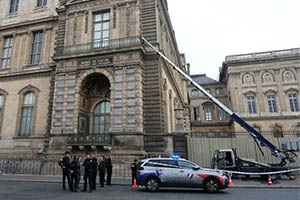 On the morning of Sunday, 19 October 2025, the Louvre Museum, the world’s largest, spanning approximately 73 000 square meters of galleries, was the target of a major theft, just moments after opening to the public.
According to investigators, a group of four thieves broke into the Apollo Gallery, home to the French crown jewels, and stole eight priceless pieces. Using a cherry picker to scale the building, the burglars smashed a window and used an angle grinder to break open display cases.
Among the stolen treasures were a sapphire necklace once owned by both Queen Marie-Amélie and Queen Hortense, featuring eight sapphires and 631 diamonds, and the tiara of Empress Eugénie, wife of Napoleon III, set with nearly 2 000 diamonds. A ninth item, Empress Eugénie’s crown, was recovered outside the museum, damaged and abandoned during the thieves’ escape.
Authorities have launched a full-scale investigation, deploying police units and forensic experts to examine security footage, possible escape routes, and any connections to organized crime networks.
This is the first major theft at the Louvre since 1998, when a painting by Camille Corot was stolen and never recovered.
The incident has reignited debate over museum insurance practices. Works held in public museums such as the Louvre are not typically insured due to the inestimable value and prohibitive cost of comprehensive coverage. In France, and many other countries, the State itself assumes the role of insurer for permanent collections. Insurance is usually reserved only for pieces temporarily loaned or exhibited abroad.